
Since the glory days of the internet struck, the TCG world has been fathomed over the use of tournament winning decks being posted online. This makes it so any nine year old kid with loads of money can become a pro without all of the work the normal player does. The question in being though, is that is net-decking is right or wrong? If you dive into any MTG forum you can quickly see the long debate and numerous opinions on the subject, but I’m not here to give you an opinion. I’m here to tell you what just might possibly be the answer everyone is looking for, that there is no answer and only different methods make net-decking right or wrong. “But wait, isn’t that just some extremely broad answer to the biggest question in gaming?” You might think so now, but if think about it, using a gun can either be good or evil, correct? The only difference that makes the item good or evil is how it is used against someone. This is the same with net-decking. Most people in the gaming world fail to see the good with net-decking in today’s society. Someone who is partially new to Magic: the Gathering (meaning they have somewhat of a deck building ability and know the rules well) and wants to go further will study the main tournament decks, that is only natural. But to get the full experience of the deck itself, they need to either see or use it in an actual game. Thus, they might take the deck they “netted” to play against their friends or to a local FNM. This doesn’t mean they are just building it to win; they want to learn how to play the game better. This game isn’t like others; you can’t just jump in and hope to do well. A proper education of the mechanics is needed, and thanks to the internet the possibilities of teaching yourself are endless. On the contrary though, there is a darker side to net-decking; and sadly to say that it mainly resides in the younger generation. When a thirteen year old picks up a game like magic, their first thought isn’t “Oh, I need to learn more about the game”, it is more than often, “Oh, this game is awesome, I need to crush everyone in it.” Thus, they go to the internet and noticing the accomplishments of the decks, they steal the idea for their own personal gain. Kids often try to impress their friends and older kids playing the game, so it is only obvious that they would try to do it in the fastest way possible and with minimum work. It is fairly simple to identify the two different brands of net-deck players. The learning player will more than likely take more time analyzing and study their cards more (sometimes obviously). However, the theft will often just play cards quickly, not understanding the full concepts of what he is playing. If you can’t tell by watching, ask them “Where did you get the deck idea?” The learner will often reply honestly with who’s deck it is and where they found, also giving what they hope to learn. On the opposing side, the thief will reply with something pertaining to “It was my idea”, so they can look even cooler. Just be on the lookout for the two different kinds of players and take note that not all net-decking is evil. -That TCG Blogger- Got a question, comment, concern? Email me at Ecomicsinc@gmail.com
The Debate of the 21st Century
Since the beginning of time, there have been two classes of gamers: the glory seeker and the thrill seeker. The glory seeker is the person who travels great distances just to be able to compete with the greatest players in the community. They know every card by heart, know how their deck will run against any other, and be prepared for anything. The game to them is just something to conquer. On the other hand, the thrill seeker plays the games in order to have fun. They don’t care what combo they pull off or how fast the game is played. Games to them are just that, games.
Everyone who has ever played a game on their kitchen table fits into either one (usually both) of these classes. Both groups play the game to experience something, what they choose to get from it is the only thing that differs. That small difference however, is what drives the community into such disputes during the battles they simulate. I have come into contact with this clash oh too many times before. Back in my early days of playing Magic: the Gathering, I went to my local shops FNM tourney and came across the famous glory seeker player. The game didn’t last too long; I had won by scorching him with burn spells. It seemed my victory was short lived though, the player had exclaimed to me that I made a rules mistake at that time (after he took a long look into my discard pile). Being a young lad at the time, I was shocked by being attacked in such a way as to cheat my way to a victory; however to my luck the tournament director was standing by and had pointed out that his complaint was useless at the end of the game. This isn’t an unusual occurrence, we always hear about that one person who kills the fun out of Apples to Apples or lives his life worshiping Monopoly. In the end though, there has to be away for all of us to live together under one twenty-sided die.
How can the glory seekers work to enjoy the game more when playing with their friends? Do they even want to? If you are indeed a glory gamer, think to yourself: do you want to be able to have fun with both the casual players and the tournament opponents? If so, then you’ve already conquered the first step of realizing the problem and wanting to fix it. To start off, you must first understand that you shouldn’t lose your tournament senses; you still want to be successful in a Pro Tour after all. What you would want to focus on is to put it plain and simple, just being friendly towards the game. You need to focus your mind in order to be willingly to give up on watching the field, especially during a casual FNM tournament. If you see that you are facing a new player, let them win a game (not too obviously of course ) or two to boost their confidence and inspire them to work harder in their deck building. Start a conversation with your opponent mid-game, possibly having nothing to do with the game itself, this will automatically take your mind off of the possibilities that flow through your head during any other game. Just taking these few steps will allow you (and the people around) to enjoy your casual games more.
What some may not realize though, is that this lecture goes both ways. The thrill seeker is always known for their lack of knowledge in the game, they seem to be just there to socialize and nothing else. The thrill player could definitely work on studying up a bit more on the game they play, just so they feel more comfortable facing their opponent and possibly even win a few rounds (note: this doesn’t effect every “thrill seeker” player). This kind of player also wants to be able to tell when the opponent doesn’t feel like talking, even when the player tries to be social mid-game at some point they will need time to strategize, during which they wouldn’t want to be disturbed. Aside from those two key things, as long as both players here follow the basic manners of a TCG, everyone can enjoy the game.
Next time you’re rolling your dice or shuffling your deck, think about what kind of players you spend time with. By knowing who they are and what they look for in the game, it is that much easier to get along with them during your games. But just remember to make sure that you and your opponent are battling to your fullest.
-That TCG Blogger-
Got a comment, question, concern, or just more to add?
Email me at Ecomicsinc@gmail.com
As we say farewell to another...
No need to get excited, I’m still going to be blogging. The title is actually referring to the announcement that Blizzard has denied the renewal of Upper Deck’s contract to create the World of Warcraft Trading Card Game. I have never played the WoW TCG in my time, but I have played numerous games that have met an untimely doom due to similar conditions, and I can sympathize with the dedicated players of the community who worked so hard to see their game succeed. That is, in short, why the players played it; they wanted the game to be great. Now that the company discontinued it, they feel like they were metaphorically left on the street and need to find somewhere to go. However, TCGs based on video games are never good ideas. Nine times out of ten the fan of the game will just overlook the cards when there’s a flashy screen to look at; this is especially true with an online game such as WoW. Not to mention the fact that even in an MMORPG, the material eventually becomes limited or just overused. Elves look the same no matter what they’re wearing or holding, same with Orcs, Zombies, and Minotaurs. That’s what has left Magic: the Gathering so successful, they are never subjective to one type of fantasy world and always add in new creature types to gaze over. In short though, World of Warcraft made an excellent video game; a trading card game though, not so much. Can trading card games be successful in today’s society? We here everyday that a new game has been cancelled or the company has been disbanded. The biggest excuse that is thrown around is that Magic: the Gathering is the most successful TCG in the market and is preventing others from gaining profit. The only problem with that excuse is that MTG hasn’t stopped Yu-gi-oh (their court situation has though) or the Pokemon card game from their success. In my personal opinion, all of these companies are becoming lazy with their designs. If you take the time to think of the possibilities, you can create an amazing trading card game, which is probably what made the previous games successful in their prime. But now, I want your opinion on the matter. What do you think about the WoW TCG being discontinued? Was it a mistake, or was it bound to happen from the previous days? Also, do you believe that a new TCG can be developed with powerhouses such as Magic in the market? -That TCG Blogger- Please post your opinion as a Re-blog. Have a question, comment, concern? Email me at Ecomicsinc@gmail.com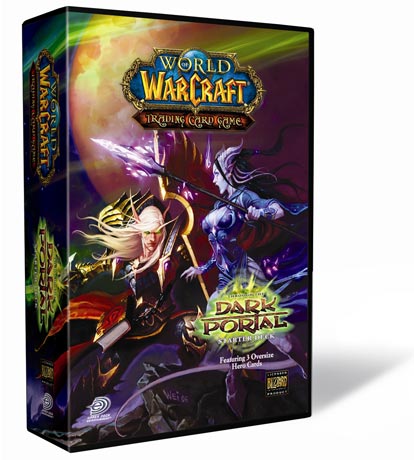
What does slaying dragons, rolling dice, and shuffling a few cards actually teach you? If you don’t know, then think about this; a group (about a hundred) of high school students in Edmonton, Canada gathered together for a Junior Achievement Monopoly tournament. The organizers of Junior Achievement designed the tournament to not only gather these students to get to know each other, but to teach economics through the game itself (the group is based on business). Teaching, through a board game? Preposterous! But then I sat back and thought about it for a minute and began to realize just how much we really get from board games and never notice. “What lessons are there to be taught from Monopoly?” I asked myself. There’s the obvious, such as conserving funds, probability of a dice roll, and knowing the other player’s inventory. What I didn’t realize right then, were the deeper lessons that normally are only taught through first hand experience: bartering with the opponents, observing facial expressions to predict future actions, and planning ahead for the future. Normally, human beings don’t come into course with actions such as these until they have already graduated high school, but every board/card game fanatic out there has already encountered, and probably mastered, these traits thanks to the games. Of course though, after thinking these deeply (and being as skeptical as I am), I thought that Monopoly was probably designed to be somewhat of an educational game to begin with. Having to add and subtract money all the time seemed like a simple gimmick to teach children math, so I did the obvious and took it a step further and did some research with other games. Dungeons & Dragons (or any Table-Top RPG for that matter) has always been known for its difficult rules and diverse strategy. Just by glancing over the character customization, you can already see the lesson in decision making is imminent with the new player; and once you have your stats set the player needs to know their characters strengths and weaknesses in order to be successful. D&D was then added to the educational list after just a few seconds of thought. The next subject on my research list was to take an educational look at the trading card game industry. Doing so, I took the most popular game, Magic: the Gathering, in the community and analyzed it. Choosing your deck allows you to practice decision making and even predict how those decisions affect you (your deck) in the future. Not to mention that in the actual game play, players are automatically forced to predict their opponents moves in order to be somewhat successful in the game. When you tap your mana, you also get an economics lesson on spending your currency wisely and making the right choice. So next time you’re planning to activate Wrath of God to clear out your opponent’s token filled field, think about the mana you could’ve saved by switching to Pyroclasm. After looking through the complex games that make through way through the market, it seemed only one thing was left; the extremely simple games. The original board games of yester years still showed the indirect educational values as everything else had. Clue had deductive skills, Scrabble gave vocabulary, and even go-fish gave the reasoning lesson. After countless hours (and a lot of rambling), I’ve come to the conclusion that board and card games are the closest things to real world experience one can find without actually knowing so. Who knew that you could prepare for your future by rolling some dice and casting spells? Next time, you decide to draw a card or move your pawn, think to yourself “What am I learning through this?” you might even be shocked with what you come up with. Source: http://www.edmontonjournal.com/life/Monopoly+good/2594162/story.html -That TCG Blogger- Got a question, comment, concern, or just want me to review something? Let me know at Ecomicsinc@gmail.com. Also feel free to Re Blog any article of mine.
About eight years ago, the video game company Square-Enix combined forces with the overly popular corporation Disney to create a game that surpassed everyone’s expectations. A few years later, after the game had revolutionized the RPG video game market, Square released yet another game relating to the best seller called Chain of Memories. The game’s battle system was based on using cards to attack foes in the game. Tomy, a game company in Japan, saw this game and was inspired to create a Trading Card Game based on the video game’s success. Thus, the Kingdom Hearts TCG was born. The game had a pretty good run in Japan, Tomy supplied a decent Open Play system and seven sets (with lots of promo cards); however after the seventh set the Kingdom Hearts TCG ended. It is not publicly known in America why the game failed, I can only assume that it had to do with content lacking and the seventh set being an utter failure (you can view the translated versions athttp://www.thekingdomheartstcg.com/). Fast forward about a year and a company called Fantasy Flight Games (FFG) flew by and imported the game to American audiences. The only problem with it was that FFG never advertised the game or made an open play system for TCG fans to want to pour their money into it. After the fourth set was released, the company announced that they had disbanded their entire Trading Card Game department due to TCGs not being profitable due to games like Magic: the Gathering (I’ll save that rant for another day), and here we are today. Before I continue on with the review, I would like to remind you that I am not expressing any opinions on the company, the video game, or the player base when conducting this review. I am only focused on giving an honest review on the game mechanics introduced in the game. The Kingdom Hearts TCG is a game in which two players take on the roles of key bearers in the universe of the video game. The player either wins by reaching their “world count” (total level of worlds in play) to thirteen by playing world cards or reducing the opponents hit points to zero. Players battle in one of two ways, by attacking heartless cards on their current world that were set by the opponent, or challenging the opposing player to battle to decrease hit points. In order to raise their player cards attack, each player can use friend cards (which add other effects), attack cards, magic cards, or equipment cards (introduced in set 4). One of the defining features this game had though was the difference in draw phase, the player whose turn it was drew up to six cards and when their deck was empty they would just reshuffle their discard pile. This simple feature added a lot of strategy to what would’ve been a very boring game. In short, this game was destined to fall, even with a company that didn’t advertise it. Sure, a game about a popular Square-Enix RPG should have easily made a quick buck in both Tomy and FFG’s eyes, but they failed to realize that not everyone is so simple minded to fall for such scams as this. Just take a look at the main rules, if both players just play world cards to win there is absolutely no player interactivity and that’s the basic foundation of any game. If you look even deeper than that though, you start to noticed how unbalanced the game is, the best deck at the game’s death was a healing stall deck. Sounds fun, doesn’t it? Sitting there as your opponent slowly creeps through to win as you can’t do anything against it. If you’re a fan of Kingdom Hearts, Final Fantasy, or classic Disney movies you’ll enjoy this game; though you might be dissapointed at the lack of flavorful cards in the game. Pro TCG players should stay away from this game due to the lack of customization among decks, though if you find it on a bargain table at a con I suggest picking up a few packs if you’re looking for a game to play where you’re bored at your local card shop. The bargain table is the only place this game can be found anymore sadly now that the game was shut out by the company. There are a group of players dedicated to preserving this TCG, so if you are interested check out http://www.thekingdomheartstcg.com/. Final Verdict: 6.5/10 Got a question, comment, concern? Email me at Ecomicsinc@gmail.com

The whole principle of a board game is simulating a fantasy experience, correct? By that logic, wouldn’t it make sense that a game that literally brings the cards in your deck to life would revolutionize the Trading Card Game world as we know it? Sony must have thought so, with the release of Eye of Judgement the player would use a webcam like object attached to the Playstation in order to bring their cards to life on the screen. Sony then did the obvious thing and advertised the game like crazy in order to get the word out, but how would gamers take this new development in the gaming industry or would it even be considered that? The average TCG Gamers looked at this game and simply laughed, the VG Gamers just brushed it aside not wanting to ever touch a card over their controller, and The Eye of Judgement is left to be a total disappointment. Was it just the player’s lack of appeal though or was the game a complete failure on all sides? You play Magic: The Gathering on the weekends, at your local card shop, compete in pre-releases, and follow the pro-tour; wouldn’t you want your card game to be taken to the online world? The average person would think so, but if you take the time to sit down with a professional player, you will find that they live for the thrill of sitting face to face with their opponent. Being able to read your opponent’s facial expressions in order to figure out their play style is what makes a table top game so fun, taking away from that only leads to making the game a robotic sequence of turns rather than an exchange of emotions in battle. That’s what separates the great players from the mediocre ones, the ability to read your opponent and tell what cards they hold just by that (see previous blogs). The fact that Sony tried to add all these flashy graphics to an already great formula kills the whole idea of card games. The Eye of Judgement being a Playstation only title obviously appeals to the gamer which at the time of its release; was limited in titles for the system. Once again though, the irony of it all sets in. Most video game junkies are just that, dedicated to the game and nothing else. When they see a card came such as this, they are automatically put off by the cardboard rectangles that they’ve never seen before. Rather than just getting into a new world, it is much easier to just play a shoot-em-up or another fantasy game that’s new to the market. It has become fairly obvious that the design crew behind the game did no market research in order to find what the fans truly wanted. The fact that the marketing research was terrible, only leads one to wonder if its not just a coincidence that they skipped out on this. Meaning, that their game was probably looked over for a reason. One of the major complaints on this game from the people who played it was the fact that the light in the room had to be blinding in order for the game to successfully work. Considering that most would play this in a basement or at night after work, that could turn out to be a huge problem. The small community of players that play this competitively complained that you can just print off copies of the cards and the “eye” would read them as the actual cards, sounds pretty legit right? With a system that needed so much to work and was so simple to hack, its obvious that the game failed from the begin with. -That TCG Blogger- Got a question, comment, concern? Email me at Ecomicsinc@gmail.com
Miniatures Gaming: A brief lesson #1
You’re at the edge of you’re seat, the tides have turned in your favor. The units in your command are about to charge your opponents final defenses to their base. Then the unthinkable happens, those few minis you forgot about sitting near the back of the map charge forward and start taking out your rear defenses. Suddenly, their so-called final defenses move up and attack as well; you’re the one who is now being put to their final defense. This happens all too much in the war based board game, a player never strategizes and inevitably falls into the trap the other player sets up. For continuity’s sake, I will be referring to a very basic war-style game that I have created specifically for this tutorial. The game will be referred to simply as “Combat”, and be played on a 25x25 neutral map with 20 pawns on both corners. The battle system is also made simple, just each player rolling a die, if the attacking player gets a higher number then the other is destroyed, if the defending player gets a higher number they stay alive; pawns have to be adjacent in order to start combat and the have a movement of five on each (and yes, they can move then attack). Please keep that in mind for the following technique tutorial. Now that you’re twenty pawns are set up in your corner, what do you do next? The first thing you want to do is to devise some sort of a strategy. In doing this, you want to know what you plan to do: lure them into a false sense of security, charge them head on, conqueror the most efficient way. In a scenario like this with neutral pawns that are able to take each other out with ease, the charge option is the least successful option however, next week I will discuss the strategy in customizable miniature games and talk about when that would be a reliable option. Anyway, the pawns are set and you decide to take them out as efficiently as possible (note how I did not say quickly). You’re probably wishing you were awake in history class the day you studied all of Napoleon’s war strategies, but never fear you don’t need to be a war buff to be successful in strategizing a combat scenario such as this. The greatest advantage you can have over your opponent is being able to watch the board and know what’s happening on all sides, and then being able to plan around that. Conquering the opponent involves taking out all of their units, so the most common ways of doing this (while still having a strategy) is trying to flank them by separating the units into small groups (usually of 3-4, depending on your total units, remember to consider these strategies differently with other games) or watching your opponent and reacting based on that (the “tic-tac-toe” method). Also be sure to note that these methods mentioned are easily recognized by a professional player and that you need to strategize on a more personal level. Now you may be asking, “Okay, I know what I want to do, but how do I actually go about doing it?” That’s where a bit of knowledge of military strategy might come in handy (I would suggest maybe reading up on common terms and such), but once again never worry. Let’s start off with the flank as an example; the basic principle of the maneuver is to surround the opponent in order to take them out in a swift strike. You start in one corner of the map with twenty figures packed in there, so in order to flank the opposing force your first move should consist of the following: mentally separating your units into three or four groups, then sending each group in opposite directions toward the enemy (the one heading straight for the opposing force should move slower so it meets up with the others at the same time). That’s the basis of putting a military strategy on a board, you first figure out the meaning of the technique in real combat then use your figures speed and power to make it happen as you see fit. A plan is nothing unless you put it into action. In the end, all of your plans are nothing unless you watch your enemy’s side of the field. Be prepared to have to suddenly change your game plan due to the fact that your opponent is doing something that completely counters your original plan. Any great miniature gamer could tell you that flexibility is a key source to being a better player. One thing that I forgot to mention, purposely, is to be aware of any effects your figures might have; I chose not to mention it this week so I could write more on this come next technique blog. -That TCG Blogger- Got a question, comment, concern, or just want to know more? Email me at Ecomicsinc@gmail.com
D&D: Now a Cause of Murder?
Read this article first please: http://news.bostonherald.com/news/regional/view.bg?articleid=1233150 The details on the crime: http://www.cbsnews.com/blogs/2010/02/15/crimesider/entry6209793.shtml Now, lets just take a moment and think. The murderer, Amy Bishop killed her brother with a shotgun (which is being claimed by the defendant as an accident) and a board game caused her to want to do this? First of all, I’m not going to dispute whether or not she committed the crime and such, I’m just a bit concerned. Concerned by the fact that our law system is willing to easily take a stab at an innocent game just because they refuse to do the research on the game itself to see if it really would cause incidents like this to happen. The evidence is right there in the article, the murder weapon was a shotgun. If it were really a killing based off the famous board game wouldn’t it be something more medieval like a battle axe , sword, dagger, etc? Second of all, I’m going to point out the fact that the article itself isn’t a reliable source, no self respecting person would use the quote : “They even acted this crap out”, especially in a professional setting. Why does it seem that Dungeons & Dragons gets attacked more than any other board game? Popular media tends to also attack this game by its portrayal of its fans in such a negative fashion, thus leading to the stereotype of “nerd”. Perhaps its because they can’t understand the game. The fact that you have to imagine yourself as someone else seems kinda of unreal, especially at the time of the game’s release and as many great creations they are first avoided by society until spread like a virus. With the whole idea of becoming someone else, the average person could come to believe that these role-players start to lose there sense of reality in doing so, especially when they happen to stumble upon a tournament center. What really irks me is that these investigators misjudge the players intelligence, all because they are playing a game. After all, we know that it is only a game. This article got me thinking back to the whole Grand Theft Auto video game fiasco that happened a few years back. If you don’t remember (and I don’t see how one could forget), thousands of complaints were sent to Rockstar Games based on the violence, language, and sex in their games that younger children were witnessing and enacting. The main argument was that kids should not see this graphic material because they would in fact re-enact it in real life (the crimes, sex, and violence) and become menaces to society. Now, based on basic psychology teachings the most influential person in a young child’s life is their parents, this is for everyone at the beginning of their lives. The only reason one would be influenced to do things based on a video game is because they were neglected by their parents to begin with. The fact that that they were slaying dragons with their level twenty mage or hijacking a car in order to stop a drug war in a fantasy world matters not, it all comes down to the parents and how they were treated early on in life. -That TCG Blogger- Got a comment, question, concern? Email me at Ecomicsinc@gmail.com
Board game company, Fantasy Flight Games, recently announced that they were in production of a history war game on the ventures of Napoleon Bonaparte. To be honest, I am kind of excited for this board game. I have to admit up front that I have been betrayed by Fantasy Flight numerous times in the past, but I must say this game looks promising. I’m a sucker for European history and this game could looks like it could be just what the war game market needed. Just looking at the cover of the box you can tell that the design looks professional. Fantasy Flight Games may have screwed up a lot of things in the past, but I’m willing to give this game a shot. -That TCG Blogger- Preview Rating: 8/10 Got an opinion and want to share it? Email me at Ecomicsinc@gmail.com
“How did you know I was going to play Wrath of God, you must’ve cheated?!” the opponent yells. “I have a full field of creatures, you were sitting defenseless and you had a smirk on your face. The signs were all there for something big, so I had to hold a counter”, I reply in dignified confidence. The ability to tell what your opponent is going to play before they do is what separates the mediocre players from the gods of gaming. First of all, if you didn’t understand my anecdote up there, “Wrath of God” is a powerful, well-known spell in Magic: The Gathering that destroys every creature on the field and can be a pretty devastating trump card if used right and becomes a good example for reading the opponent. Anyway, be prepared for plenty of Magic references in the future since its an easily relatable game for most and well-known throughout the world. Now, about reading the opponent, there are a few key things you need to know. First of all, you need to know what kind of player your opponent is, you can tell this just by watching the cards/pawn and how they play them. You also need to know what is in play at ALL times, one moment of brain lapse and you have left yourself open to a direct attack. The most important thing, and probably the most difficult, to do is being able to know what your opponent is about to play. What type of player is your opponent? I believe that Magic: the Gathering put it best when they created their three player archetypes: Timmy, Johnny, and Spike. The Johnny player is the player who sits there trying to pull off “the perfect combo”, the one that involves as few cards/moves as possible and guarantees victory. The Timmy player enjoys the thrill, they want to summon the coolest cards and crush you where you stand with the most powerful characters in the game. The most confusing player here is the Spike, he/she will sit there trying to playing the moves that would make any normal person question their intelligence. Though at the end of the day, the Spike tends to be able to lead their opponent into a false sense of security by this trick by pulling these useful cards together into a player crushing combo. When reading the opponent you need to ask yourself a few questions: What are they trying to do in the game? Are they trying to pull off a game winning combo, beat you into a pulp by playing the power strategy, or just trying to prove they’re better by means hidden. How are they going about doing it? By directly confronting you, indirectly waiting for the right moment, or doing it in a way you don’t yet understand. What do they want out of the game? To win by any means necessary, pull off an infinite combo (a combo that triggers an infinite amount of times), or proving their intellectual skill. If you wish to be able to read your opponent you need to be able to tell what kind of player they are, look for small coincidences based on the descriptions here and also note that they may be a combination of two, such as wanting to prove something by creating a powerful creature. Ever had this problem happen to you? You’re playing a card game, and suddenly your opponent plays a card that targets the discard pile and you didn’t realize that the card you forced them to discard is now in play and now a major threat to your victory. The key to any game is being able to tell what’s in play at all times, just because something isn’t in the main battlefield doesn’t mean that it is no longer a threat to your game. Especially those who have ever played Yugi-oh know that cards like Monster Reborn and Call of the Haunted were able to combo with any discard card to bring out a powerful creature. Also, always note how many cards your opponent has in their hand, just because they are invisible to you, does not by any means rule them out as threats to your plan. There is not a single game that I know of, that has no instant based cards in the game so be wary of them. Just because you are able to attack them directly, doesn’t always mean you can come back alive from it. The final key to this whole process is being able to know what’s in your opponents hand. If you know their player type and have been able to read their deck for at least two turns (sometimes even more), then it is simple to know what they are trying to do. First of all, you need to know every card available to the player. Luckily with Magic, there’s only around six sets that remain tournament legal at a time so keeping up isn’t that huge of a problem, its just taking the time to familiarize yourself. Sun Tzu said it best with “Know thy self, know thy enemy. A thousand battles, a thousand victories.” Simply meaning, you need to know what your enemy has in their deck (by understanding the possibilities of what they could have) as well as you know your own cards before you can expect to be successful. You then need to understand the situation, if you’re opponent is sitting there taking damage, then they obviously are planning something and you need to be prepared. On the contrary, if they are attacking you relentlessly, then you should know what to expect, more power heading your way. The player who can read deep into the depths of the others mind will always come out on top. Afterall, these games are based purely off of strategy. The most key thing you need to know above all, is to know who you are. If you are unaware of what player you are, then you will automatically be going into the match blind and be at a loss. Also knowing what you are going to do in a game can allow you to possibly prevent your opponent from reading you, if you like leaving your opponent at a loss. Above everything I’ve said in this post though, have fun in your games. After all, they are only games. Keep on Rollin’ -That TCG Blogger- Want to know more? Got a question/comment? Contact me at Ecomicsinc@gmail.com

Its time to go MidEvil on your ass!!
“This is my…broomstick?!” I am confident that everyone has seen the oh so classic film Army of Darkness in all its glory. A few years back, Twilight Creations (famous for their “Zombies!!!” board game series) created a little game called Midevil based indirectly (but obviously) on the famous movie. In Midevil, you have escaped the zombie horde only to find yourself trapped in the past being attacked by a new threat of skeletons that want your head on a stick. The game uses the same system as “Zombies!!!” (Placing map tiles, battling hordes of enemies, etc.) but adds a few new twists to the mix such as: player versus player combat, a points system, and new possibilities for creative game play. The main idea of a game is competing against another player, this is most common in the form of two (or more) players “fighting” against each other on the board. What the original “Zombies!!!” lacked was a way to directly combat the other players on the field (however, there were so many indirect ways that it didn’t matter). Midevil makes up for this with its player versus player system in which after a player picks up the Necronomicon (the item needed to win the game), they are open to be attacked by the other players by the same means as with skeletons. If a player’s pawn were to land on the same spot as the one with the Necronomicon, then those players automatically start combat by rolling one die each in order to see the highest value. This combat works in the way with fighting other enemies in that the player can use life and skeletons to either re-roll or add points to their die roll. Combat systems that involve players interacting with each other directly such as this are key in any successful game, two people sitting across from each other playing solitaire is no fun at all. With using such a randomized combat system, by rolling a die and hoping for a one-half chance of killing an enemy there always has to be a way to increase your chances. In “Zombies!!!” there is the “Bullet system”, where the pawn starts out with three +1 tokens and generally picks up more throughout the game. In Midevil, the system differs a bit in which the player has to kill enemies in order to receive the bonus. Meaning that, each skeleton killed gives you a different bonus in combat when you choose to discard it: blue is a +3, red is a +2, white is a +1. The system sort of reminds me of an RPG, where in order to get stronger in battle you need to take out enemies first. Rather than starting out with a boost and strategizing off of that, everyone starts out on even ground and gets to work off of that and hope that their chances grant them boosts. The great thing about Twilight Creations is that in every rulebook they openly say that you bought the game and that you can play this game however you want. This isn’t like Magic: the Gathering where you have rule Nazis around every corner of a tournament hall ready to bite your metaphorical head off. You are free to make up scenarios, combine it with other games, or even completely re-write the rulebook yourself and no one would care, in fact they might even give you a couple of ideas. In fact, Twilight Creations even hints at the idea of combining it with one of their “Zombies!!!” sets. “Zombies!!! set 4: The End” was based off the movie Evil Dead, which is the prequel to Army of Darkness giving the player the idea to live out a great movie. Board games like this are made to be altered to your own liking, that’s how the Table-Top RPG industry is so popular right now. The “Zombies!!!” system is always known to be outrageously fun and now with the added player on player battle system, the game becomes even more enjoyable. Its also safe to mention that I love the movie Army of Darkness, and any fan of the movie will love this game. The one thing that kind of left me dissapointed was the fact that it was indeed a “Zombies!!!” remake, I picked it up hoping for a new system and was a little disheartened until I actually played the game. In the end, I have to rate this game easily at a 8.5 out of 10. -That TCG Blogger- Agree/disagree with my rating? Got a question/comment? Feel free to contact me through this account or at Ecomicsinc@gmail.com
What I'm About
Good day one and all, and I must first go out and thank you for taking the time out of your busy schedule in order to read my glorious blog postings. I would wish to start out my blogging career by telling you who I am and what I am about. After all, who wants to read about the opinions of some stranger they know nothing about? Any great writer first has to become connected with his/her audience in order to truly find himself, which I have found out first hand in various other sites. I am currently finishing off my years in high school with a bang, by enjoying every last minute of it. It seems that there would be people who would possibly have a problem with reading the opinions of a high school student, but I must also oppose the counter-argument that there are oh too many adults out there who are unintelligent enough to lack the ability to come up with an opinion of their own. Aside from that, I’m just your average student who plays in the drum-line and is a die hard fan of the trading card game fascination that is sweeping the nation.My first encounter with this gaming industry started with a Pikachu card from the original base set when I was seven. It simply blew me away, how the characters I loved were made into cards like that. Soon after I learned how to actually play the game and started competing amongst my friends, I found a love for the game. After my youthful days of the Pokemon TCG I moved on to Yugi-oh, and oh what an adventure that was, but I digress. Now a days I play games such as Magic: The Gathering, Monsterpocalypse, and various other fantasy board games. Now, enough about me. I want to know what you, the audience, want to hear. What would you want me to review? What do you want to see news about? Or just drop a comment saying hello, anything is much appreciated. I hope that someday we can make this a central location for news and reviews in the TCG world and I’m going to work my hardest to make that dream a reality. After all, no media source can be successful without first having the appreciation of the audience. Thanks for reading - That TCG Blogger -